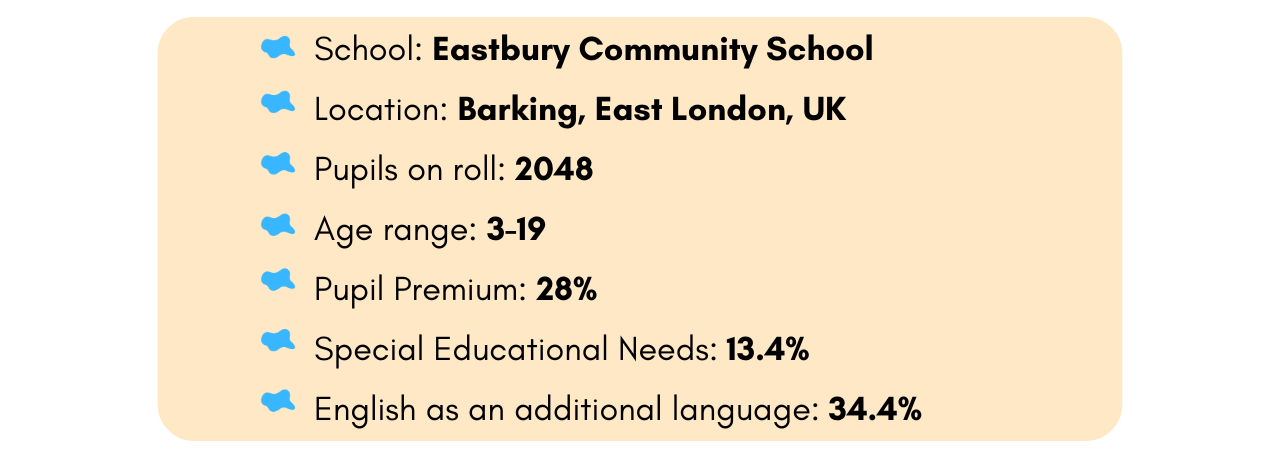
For Eastbury Community School in East London, Sounds-Write has been transformational. Jaspreet Bansal, Associate Assistant Head and EYFS Phase Leader explains how it’s all down to robust and thoughtful implementation and sustaining high-quality delivery over time.
We chose Sounds-Write because it is an evidence-based programme that aligns precisely with how children learn to read and spell. It supports children to develop a secure understanding of the alphabetic code, which was a key priority for us in raising standards and closing gaps, particularly for disadvantaged pupils and those at risk of falling behind.
Unlike other schemes we have used previously, Sounds-Write does not overload children with incidental or implicit learning. Everything is explicit, systematic, and purposeful, which has had a significant impact on both pupil confidence and outcomes.
The training gave staff a deep and secure understanding of how reading and spelling work, why some commonly used approaches are ineffective, and how to deliver lessons with precision and fidelity. Staff valued that the training was research-informed yet highly practical, with strategies that could be implemented immediately in the classroom. As a phonics lead, the training also enabled me to coach staff effectively, quality assure practice, and address misconceptions across the school.
We implemented Sounds-Write strategically and incrementally, beginning in EYFS before embedding it consistently into KS1. From the outset, we ensured that:
- All staff were trained before delivering the programme.
- Expectations around lesson structure, routines, and language were clear and consistent.
- Assessment, keep-up, and intervention were built into the timetable.

Children feel successful because learning is explicit and achievable. They understand why words are read and spelled in particular ways and are confident to attempt unfamiliar words independently.
Jaspreet Bansal, Associate Assistant Head and EYFS Phase Leader
Staff response has been overwhelmingly positive. Teachers and support staff consistently report that the structure removes ambiguity and increases confidence, lessons are focused, purposeful, and efficient, and children make rapid progress, which is motivating for both staff and pupils.
Because the majority of staff are trained, there is a shared professional language, and teaching assistants can actively support learning rather than simply supervise.
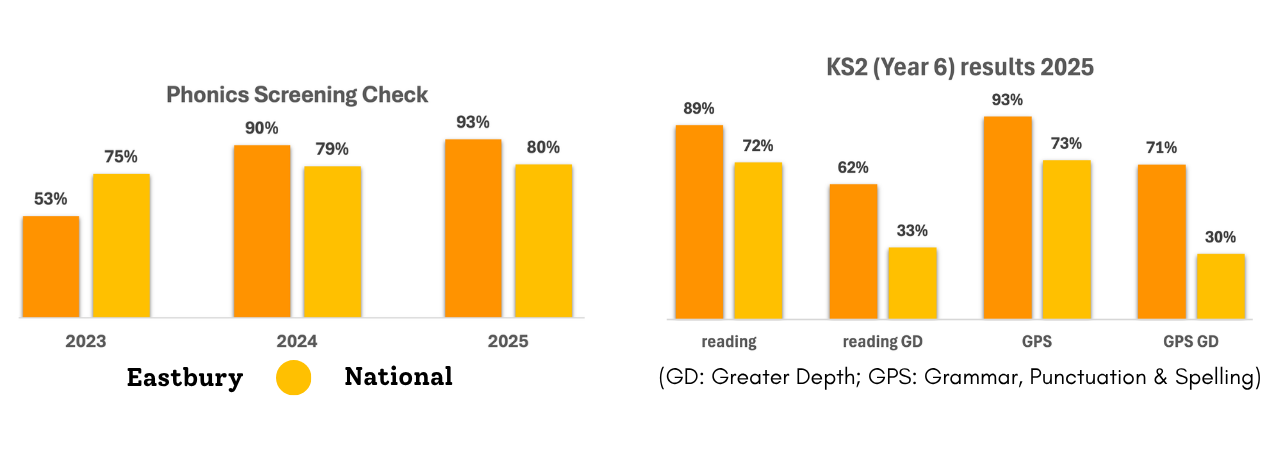
The impact on pupil outcomes has been significant, including:
- improved phonics outcomes across EYFS and KS1
- faster identification of gaps through robust assessment
- strong progress for disadvantaged pupils and those requiring intervention
- increased confidence in both reading and spelling
Children are now able to decode unfamiliar words independently, and spelling reflects secure phoneme–grapheme knowledge rather than guesswork.
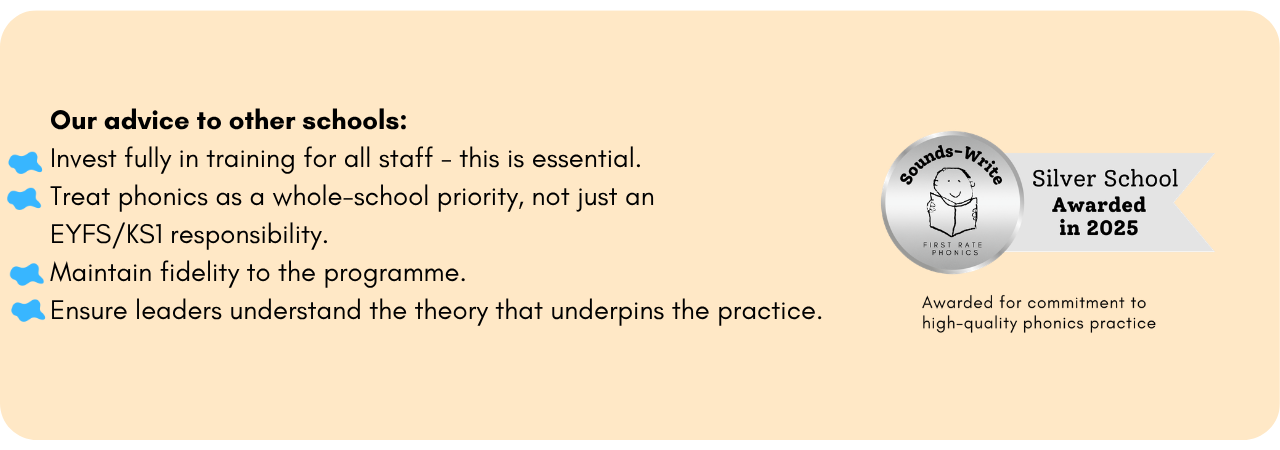
Sounds-Write works so effectively in our school because it is treated as a long-term strategic commitment, not a short-term initiative.
We have made a significant investment into training all adults across the school, ensuring consistency, shared understanding, and high expectations at every level. This commitment has been key to embedding the programme successfully and sustaining high-quality delivery over time.
Our practice has been externally validated through Challenge Partners, with schools from different boroughs visiting us to observe Sounds-Write in action. These visits have provided opportunities for professional dialogue and have reinforced the strength and consistency of our approach.
We protect fidelity through whole-school training and ongoing CPD, regular quality assurance and coaching, and purposeful use of assessment to drive teaching and intervention.
You may also like
‘Children develop more independence as readers and writers’: Ellesha Gray, Woodham Academy
Woodham Academy is a mainstream secondary school that serves a diverse intake of students, many arriving in Year 7 with reading ages significantly below age-related expectations. We talked to Ellesha Gray, Literacy Coordinator, about how they’ve implemented...

‘No child leaves without being able to read’: St George’s C of E Primary School
At St George’s Primary School in London, literacy is ‘the heartbeat of the school’. For over a decade, Sounds-Write has been shaping teaching, leadership, outcomes and culture, explained Sarah Collymore, Headteacher, and Georgia Orchin, Deputy Headteacher.The school’s...

‘Pupils have a sense of pride in their growing abilities’: Audrey Duffy, Waulud Primary School
Audrey Duffy, Phonics Lead at this two-form entry school in Luton, England, explains how, despite serving a community with above-average levels of Pupil Premium eligibility, Special Educational Needs, and pupils with English as an Additional Language, careful planning...
Discover Sounds-Write
Book a free consultation to discuss your individual training needs.