Bialik is a dual-language school (Hebrew and English), which makes it more critical that time spent on English literacy is focused, and follows the best practices in how to teach children to become skilled readers and writers. Poppie Butler, Special Education Resource Teacher (Elementary), told us their experience of using Sounds-Write.
Our literacy practices were rooted in the past and used Whole Language approaches such as memorization of whole words, drilling, and guessing words from first letter and accompanying pictures. Some explicit phonics was taught, but teachers could decide which phonics patterns to teach and how.
Although some of our students were learning to read and spell, it was clear that we were not reaching all of our students. Many lacked a fundamental understanding of the alphabetic code, of how speech sounds are represented in written language by letters and letter combinations. We needed to make a change and the research was clear that explicit systematic phonics instruction in the lower grades was the best way to teach children to become skilled readers and spellers.
We needed to make a change and the research was clear that explicit systematic phonics instruction in the lower grades was the best way to teach children to become skilled readers and spellers.
Poppie Butler, Special Education Resource Teacher (Elementary)
We searched for a phonics program but were not persuaded until we found Sounds-Write. We started by training our teachers and found the training intensive but very accessible.
At the same time, we replaced our levelled readers with decodable ones, so that when our students sat down to practice reading, they would be presented with texts that for the most part contained only the specific letter-sound correspondences they had learned.
What impact are you seeing?
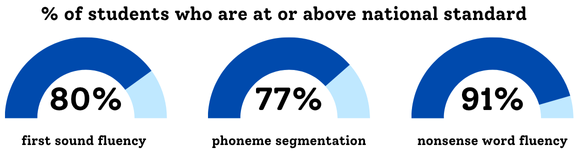
We started using standardized assessments so we could truly measure our students’ progress against other students their age. We only have one year of data so far, but even without a comparison from previous years, these results are very exciting. We are definitely doing something right!
Students that are below grade level are just given more intensive instruction in smaller groups, or in some cases even one-on-one with our reading specialist. They will get there, it just might take them more time, more exposure and more practice to build the strong foundation they need to become skilled readers and writers.
How did parents react to the move to Sounds-Write?
Some parents were very uncomfortable with the shift we were making, especially parents who had older children who had learned how to read just fine “the old way”. So, we wrote a letter to parents outlining the research that “inspired” our shift to Sounds-Write and to a structured linguistic literacy approach, and also addressed it with our parent body on our teacher night. And once they started to see the results for themselves, they were definitely on board.
What are your next steps?
We plan to continue with Sounds-Write and a structured linguistic literacy approach as the basis of our literacy program. It is clearly working. We will be training our Grade 3 teachers and extending the Sounds-Write program into our Grade 3 classes in the upcoming school year, and integrate explicit morphology instruction into our literacy program especially in older grades.
You may also like
‘Sounds-Write is a long-term, strategic commitment’: Jaspreet Bansal, Eastbury Community School
For Eastbury Community School in East London, Sounds-Write has been transformational. Jaspreet Bansal, Associate Assistant Head and EYFS Phase Leader explains how it’s all down to robust and thoughtful implementation and sustaining high-quality delivery over time. We...
‘Children develop more independence as readers and writers’: Ellesha Gray, Woodham Academy
Woodham Academy is a mainstream secondary school that serves a diverse intake of students, many arriving in Year 7 with reading ages significantly below age-related expectations. We talked to Ellesha Gray, Literacy Coordinator, about how they’ve implemented...

‘No child leaves without being able to read’: St George’s C of E Primary School
At St George’s Primary School in London, literacy is ‘the heartbeat of the school’. For over a decade, Sounds-Write has been shaping teaching, leadership, outcomes and culture, explained Sarah Collymore, Headteacher, and Georgia Orchin, Deputy Headteacher.The school’s...
Discover Sounds-Write
Book a free consultation to discuss your individual training needs.