With more than 9,000 apps marketed as supporting early reading development, parents and educators find it almost impossible to choose truly effective apps for reading instruction. The authors of the study conclude that despite widespread use, most literacy apps do not reflect the science of reading and, crucially, that app store star ratings do not necessarily reflect educational quality. An app can be extremely popular but still not teach reading effectively.
The authors of Finding the Needle in the Haystack: A Quality Appraisal of Mobile Applications for Foundational Literacy Skills reviewed 309 English language apps targeting phonics and phonological awareness in the Apple and Google Play stores. Fewer than a third of the apps reviewed would be recommended by the experts. Paid apps tended to score higher than free apps, but price was not a guarantee of pedagogical soundness.
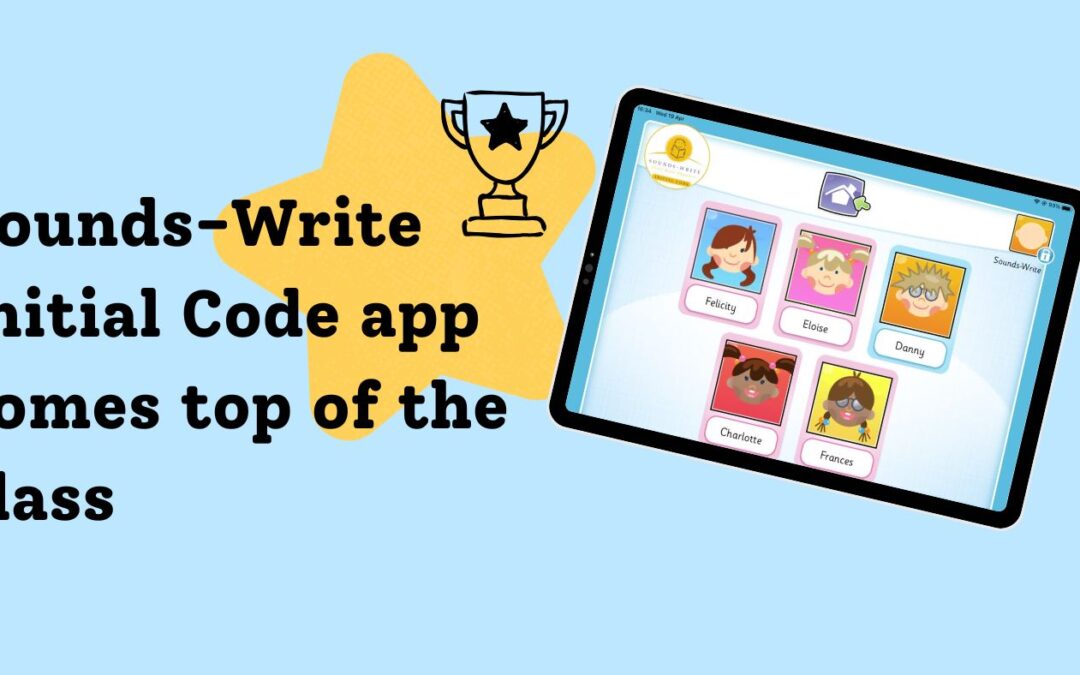
The Sounds-Write Initial Code app was ranked 2nd amongst all of the apps reviewed in the study.
The research is clear on what effective reading instruction should look like: explicit, systematic, cumulative, and initially focused at the phoneme level. Apps that claim to teach phonics and phonological awareness should reflect these principles.
While many of the reviewed apps look appealing and function smoothly, they often teach phonics inaccurately or lack key features of effective literacy instruction. For example, many apps use incorrect sound pronunciation, present letter–sound relationships in random order, or rely on guessing, trial and error or passive matching rather than real decoding. Few apps provide appropriate feedback, controlled decodable practice, or customisation to match learners’ needs. Only 10% of the apps follow a phonics sequence that builds in a logical way, and even fewer (the Sounds-Write Initial Code app amongst them!) are aligned with established reading programmes.
What this means for the industry
- The majority of apps currently available may hinder rather than support early reading development.
- The market needs more apps grounded in well-established principles of literacy instruction.
- Developers should focus on instructional accuracy instead of entertainment and visual appeal.
- Stronger regulation and certification of educational apps is urgently needed to protect consumers and improve app quality.
What this means for teachers
- Apps should not replace explicit, systematic phonics teaching.
- If you use apps at all, choose ones that:
- teach phonemes clearly and correctly
- move in a structured sequence
- give children practice with content they’ve already learned
- provide useful feedback rather than simple “right/wrong” sounds
- Be cautious of attractive graphics or high ratings — they don’t guarantee good teaching.
My pupils loved this so much we put the full version in all our school iPads and they look forward to finishing a 1:1 session with the app
Access the Sounds-Write Initial Code App
Give your students extra practice with the Initial Code by Sounds‑Write App! Designed to complement classroom phonics teaching, the app offers structured activities that strengthen skills in blending, segmenting, word reading, and sentence writing. Perfect for reinforcing learning at home or in school, it provides a free sample of activities with the full version available as an in‑app purchase.
Available on the Apple App Store for iPads (iOS 12 or later), educators and parents report significant improvements in children’s confidence and literacy skills.
You may also like

Decodable Readers vs Levelled Readers: Building Stronger Foundations for Early Literacy
When choosing resources to support early reading, educators often face a key decision: decodable readers vs levelled readers. While both offer structured experiences for beginning readers, the path they build toward literacy is vastly different. In this blog, we’ll...
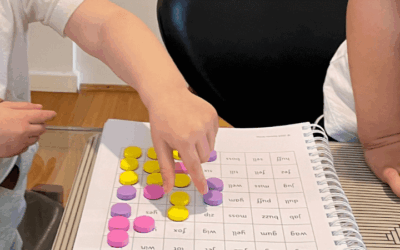
‘It has been a wonderful gift for our family’: Susan Tracey, Homeschooling Parent
Susan joined the Sounds-Write program after choosing to homeschool her two young children. In this blog, she shares her successes, challenges, and how the program supported her to teach her children to become proficient readers, writers and spellers. Why...