
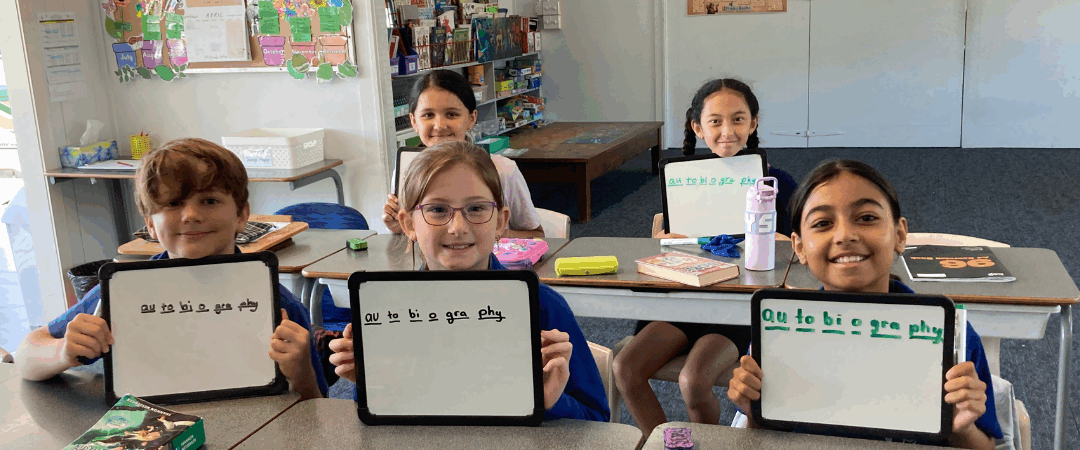
Megan Wildermuth, Classroom Teacher and Literacy Coordinator, shared with us how Sounds-Write has been implemented at Dutton Park and how it has been received by students, staff and parents.
Why did you choose Sounds-Write and how did you find implement it?
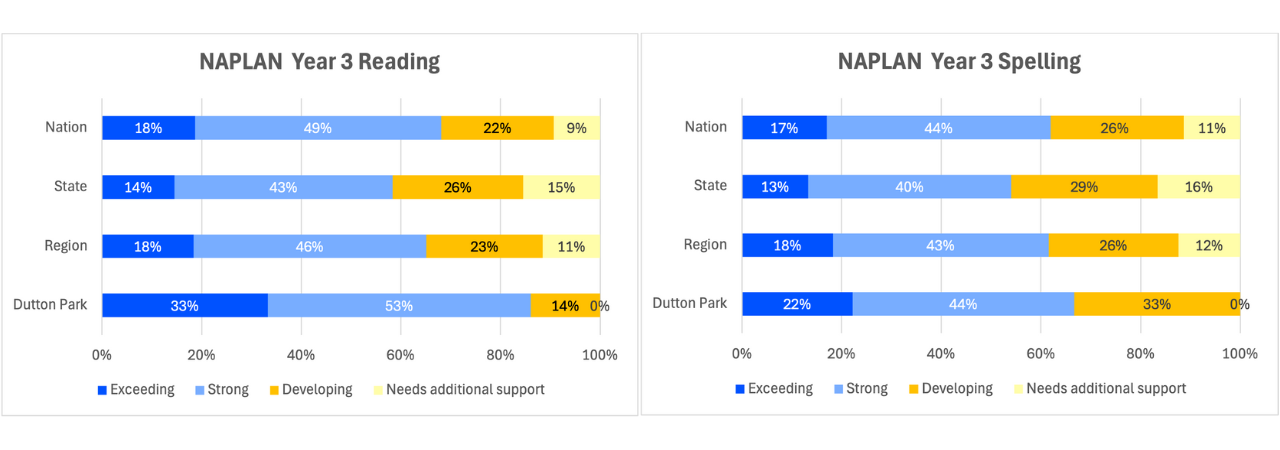
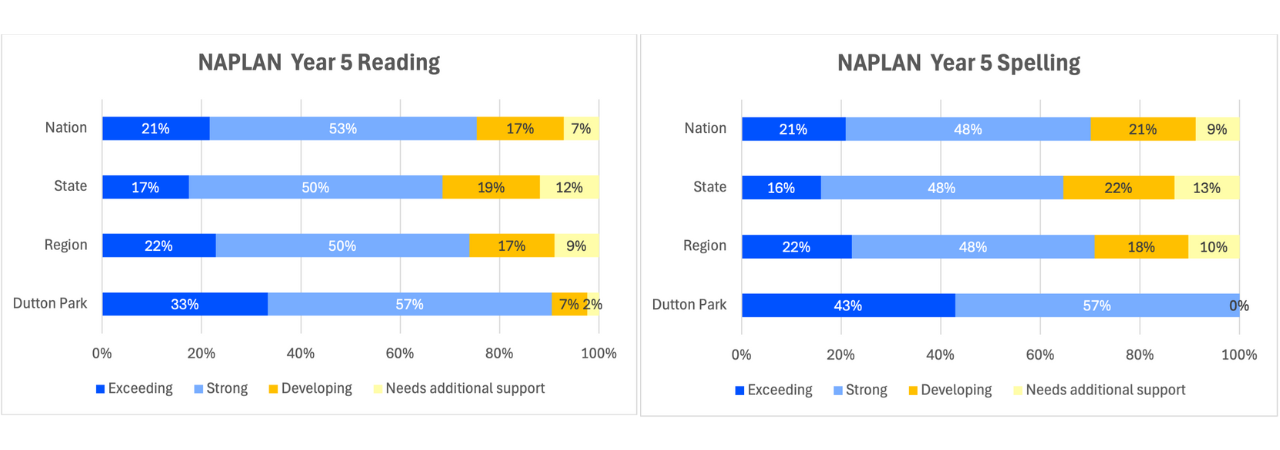
In late 2020 we reviewed our reading and NAPLAN data noting consistent drops in reading, writing and spelling from Year 3 to Year 5. We began to investigate the literature around the science of language and reading, and identified phonics as our first priority.
We evaluated a significant number of programs before selecting Sounds-Write because of its clear evidence base, structured synthetic approach, ability to be used in Tier 1, 2 and 3 instructional settings, capacity for use as a whole-school approach to reading and spelling from Prep to Year 6, its diagnostic capability, focus on fidelity of implementation, and the many recommendations we heard – “it’s the gold standard!” We visited a Sounds-Write school to see it in practice and this confirmed all we had read.
We visited a Sounds-Write school to see it in practice and this confirmed all we had read.
Megan Wildermuth, Classroom Teacher and Literacy Coordinator
Our Prep-2 teachers, intervention specialists and literacy coordinator completed online training in early 2021, commencing instruction in Term 2. Teachers in Years 3-6, our Speech Language Pathologist and Guidance Officer completed training later that year. A year later, our upper school teachers, literacy coordinator and intervention teachers completed the Sounds-Write in Y3-6 course. Since then, we’ve trained all new staff as they’ve joined the school.
Parents were instrumental in supporting and funding Sounds-Write at our school. The Parents and Citizens Association funded teacher training and the purchase of a full range of decodable texts to match the Sounds-Write sequence. They have ensured there are sufficient texts for classroom use and for home reading, as well as funding the Sounds-Write app for iPads.
How have staff reacted to Sounds-Write?
From the first day of training, teachers could see that it made sense. They have embraced the development of a whole-school literacy program, with Sounds-Write explicitly taught from Prep to Year 6 ensuring a structured, sequential approach to phonology, morphology and etymology across the school. And the results speak for themselves (NAPLAN, 2023).
Any thoughts for other schools who are considering Sounds-Write?
Our experience with Sounds-Write confirms it is the gold standard, evidence-informed approach to phonics, morphology and etymology. Not only will it more than meet the needs prescribed by state and federal governments, the Sounds-Write approach and resources are firmly embraced by our teachers, and continue to engage and delight our students.
We are thrilled with Sounds-Write at Dutton Park State School!
You may also like
Nursery children are ready for phonics at Weeting C of E Primary
At Weeting C of E Primary in Norfolk, phonics begins in nursery with a focus on developing children's phonological awareness and preparing them for formal reading and writing instruction. The school has used Sounds-Write from Reception to Year 6 since 2020, and...
‘Sounds-Write has been one of the most valuable developments we’ve made to our Early Years curriculum’ at Eastbury Community School
At Eastbury Community School in East London, Jaspreet Bansal, Associate Assistant Headteacher, EYFS Lead and Phonics Lead, explains how introducing Sounds-Write in Nursery has strengthened the foundations for early reading and created a more seamless transition into...
Allied Health Partnerships highlights the impact of Sounds-Write for linguistically diverse students
In addition to providing Sounds-Write training to professionals, Allied Health Partnerships has developed a school-based intervention model that combines speech pathology expertise with Sounds-Write. Its speech pathologists provide targeted literacy support for...
Discover Sounds-Write
Book a free consultation to discuss your individual training needs.