
Children really enjoy phonics lessons at Whinney Banks Primary School
When Whinney Banks Primary School in Middlesbrough adopted Sounds-Write in 2019, it was looking for a phonics programme that reflected both the science of reading and the needs of its pupils. With many children starting school with low levels of speech and language, the school wanted an approach rooted in spoken language, explicit teaching and inclusive classroom practice. Early Reading and Phonics Lead Ruth Verrill explains how comprehensive staff training, instructional coaching and whole-school consistency have transformed the teaching of reading, writing and spelling from Nursery through to Year 6. By embedding a shared language and approach across every classroom, the school has helped children become increasingly confident and independent readers and writers. Whinney Banks’ experience demonstrates how sustained investment in teacher expertise and high-quality implementation can lead to lasting improvements in literacy outcomes and wider school achievement.

School: Whinney Banks Primary School
Location: Middlesborough, England, UK
Pupils on roll: 400
Age range: 2-11
Free school meals: 47%
Special Educational Needs: 18.5%
English as an additional language: 14.1%
‘Sounds-Write stood out as it starts with the sounds of speech and gives children a strong and developmentally appropriate foundation for learning to read and write.’
Ruth Verrill, Early Reading and Phonics Lead
Why did you choose Sounds-Write?
Many of our pupils start school with low levels of speech and language, so an approach rooted in spoken language made sense. Sounds-Write stood out as it starts with the sounds of speech and gives children a strong and developmentally appropriate foundation for learning to read and write.
The way Sounds-Write approaches teaching also fits well with how we work as a school. It promotes whole-class, inclusive teaching, with a strong focus on high-quality formative assessment and personalised support to help every child make progress. The excellent training gave our staff a clear understanding of the skills, code and conceptual knowledge children need to succeed.
How have you implemented Sounds-Write?
The structure of the programme, with a mix of lessons that build specific skills and gradually introduce new code knowledge, helps manage cognitive load really effectively. This is especially helpful for our more vulnerable readers and writers, giving them the support they need to grow in confidence. The programme is now fully embedded from Nursery to Year 6, and continues to support our Key Stage 2 learners with spelling and vocabulary knowledge.
Every member of staff, including support staff, is trained in Sounds-Write and several have taken on further training in leadership, interventions and KS2 teaching. We’ve introduced a coaching model to raise the quality of teaching and achieve consistency across all year groups. It means children are confident with the language and structure of the programme, and as they move through school, there’s no lost time—they can pick up where they left off and keep moving forward.
Our staff all use the same Sounds-Write language when talking about reading, writing and spelling, helping children build on what they already know. This benefits everyone, but especially those who find reading and writing more challenging.
‘The phonics leader has regular time dedicated to coaching and monitoring school-wide practice, plus an extra weekly session for planning and reflection.’
How have pupils found it?
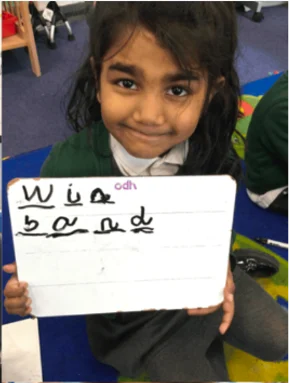
Our pupils really enjoy their phonics lessons and quickly become experts themselves. The variety of lesson types, whether recapping, learning something new or applying it in reading and writing, means children get lots of practice. This repeated exposure helps them become more accurate, fluent and confident over time.
By using a consistent approach when children make mistakes, we’ve helped them develop more independence as readers and writers. They’re much better at spotting tricky parts in words and working out how to correct them. The Sounds-Write approach isn’t just limited to phonics sessions, it runs through all subjects and classrooms, giving children the chance to practise and apply their skills in lots of different contexts.
What impact has it had on student learning and results?
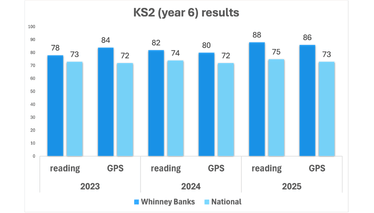
Phonics Screening Check outcomes keep improving, with almost all children passing by the end of Year 2. By the end of KS2, our reading, writing and spelling (GPS: grammar, punctuation and spelling) results are well above the national average. This is significant progress when, on average, only 35% of our children are working at the expected level when they join us in Early Years.
Sounds-Write Accreditation
We’re proud to have achieved Sounds-Write Gold School Accreditation. This award reflects our ongoing commitment to providing the very best phonics education and supporting our pupils to become confident, independent readers and writers.
All of this is a credit to our staff, whose hard work, dedication and commitment make a real difference every day. We place great importance on early literacy and know just how crucial it is in setting our pupils up for future success. Even with an experienced team, we never stop learning. Our staff are always looking for ways to improve, so we can continue giving every child the strongest possible start.