
Children are ready for phonics at Weeting C of E Primary School
At Weeting C of E Primary in Norfolk, phonics begins in nursery with a focus on developing children’s phonological awareness and preparing them for formal reading and writing instruction. The school has used Sounds-Write from Reception to Year 6 since 2020, and introduced the approach to nursery in 2026 following staff training on the Sounds-Write in the Early Years course. In this case study, Headteacher and Phonics Lead Dr Jacqui Hardie explains how the nursery team has embraced a structured approach that builds on children’s existing experiences of songs, rhymes and stories. Staff have developed greater confidence in supporting oral blending, segmenting and listening skills, while children have responded enthusiastically to the daily sessions. The school reports that children who experience the approach arrive in Reception more confident, familiar with phonics routines and ready to apply their phonological knowledge to reading and writing.
School: Weeting C of E Primary
Location: Weeting, Norfolk, UK
Pupils on roll: 129
Age range: 2-11
Free school meals: 31%
English as an additional language: 6%
Special Educational Needs: 31%
Why did you decide to introduce Sounds-Write in the nursery?
The school has used Sounds-Write from Reception through to Year 6 from 2020, and has seen positive outcomes in terms of both reading and writing for children, particularly in Reception and Key Stage 1. Once the nursery had joined the school, staff were trained during the spring term 2026 in how to use a variety of Phase 1 materials to support the planning and delivery of phonics.
How do you use Sounds-Write in the nursery?
Sounds-Write was introduced at the start of the summer term. Staff fully embraced the nursery Sounds-Write planner and the three-part session. They particularly liked the ‘connected text’ element as this raised the status of songs, rhymes and stories as part of phonics with room colleagues and families. As a school, we audited the books in the nursery and school library and made a significant investment so that all the titles are available to the nursery team.
What has been the impact of training nursery staff to introduce phonics?
The nursery team have responded very positively to using Sounds-Write. The training gave them a secure understanding of phonological awareness and provided them with a clear structure to plan and deliver daily phonics sessions. The content has shown them the importance of developing children’s competency in phonemic knowledge, rather than immediately starting to introduce letter sounds. The structure and content of the programme has shown staff that everyday experiences that had taken place in the nursery previously, such as sharing stories and rhymes, are a key component of developing children’s phonological awareness. The clearly laid out teaching plans have ensured that sessions are taught consistently and with fidelity.
How do children respond to Sounds-Write in nursery?
The children have responded with great enthusiasm to their daily phonics sessions. They have picked up the routines of the three-part session quickly. They readily engage with the activities and have fast developed firm favourites.
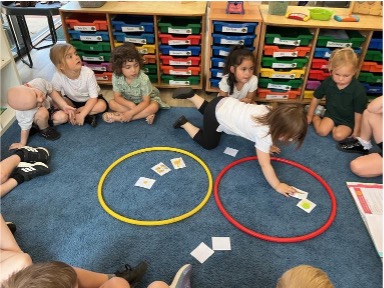
‘We introduced games to help children identify the initial sound of words, pairing up objects and pictures that start with the same sounds and sorting pictures into hula hoops, depending on their initial sound’.
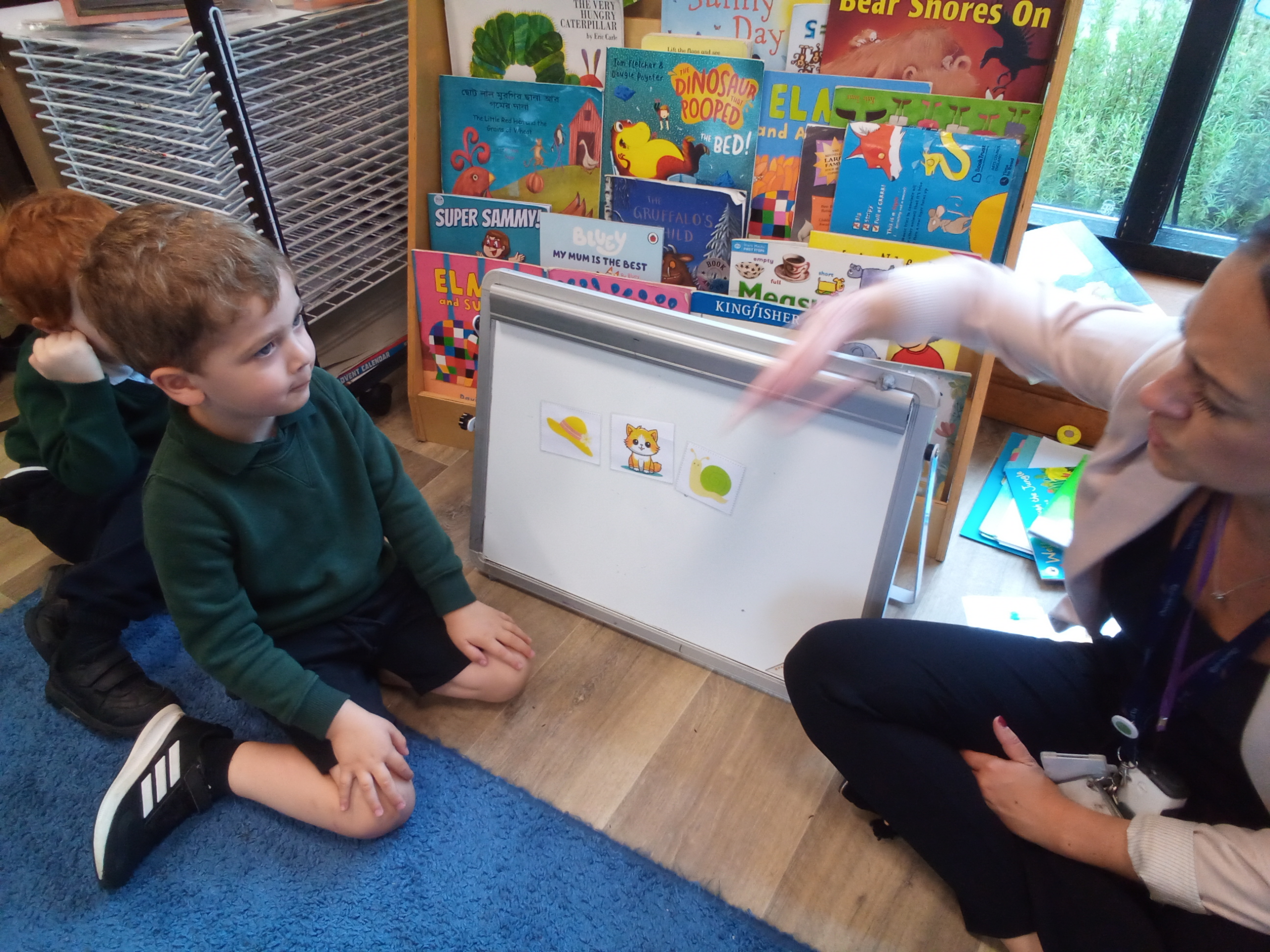
‘We worked on identifying the initial sound of words. The children were shown 3 objects or images and asked to identify which was the odd one out and which image/object did not have the same initial sound as the others’.
Are children ready for phonics in nursery?
Observing sessions in nursery last term showed that the children are ready for phonics. The structure of the session and nature of the activities has reduced cognitive load on children, enabling them to focus on using and applying their phonological knowledge in a range of situations. As new children have joined, they have benefited from being with children who are familiar with the routines and activities. Having children aged two to four in a session has provided our youngest with some very positive role models.
How do you measure impact?
Children who have experienced the nursery Sounds-Write approach are more familiar and confident with oral blending and segmenting than children who have not had this experience. They are ready to make the move and apply these skills into reading and writing. Their listening skills seem to be more developed, and they are already familiar with the expectations of the three-part session and the call and respond approach they will experience in Sounds-Write as they move through the school. Children moving from Nursery into Reception have the focus and attention needed as they move into the Initial Code.