
'Sounds-Write has been one of the most valuable developments to our Early Years curriculum' at Eastbury Community School
At Eastbury Community School in East London, Jaspreet Bansal, Associate Assistant Headteacher, EYFS Lead and Phonics Lead, explains how introducing Sounds-Write in Nursery has strengthened the foundations for early reading and created a more seamless transition into Reception. Previously, Nursery focused primarily on Phase 1 phonological awareness, but the school wanted to build on this with developmentally appropriate early phonics. Sounds-Write is introduced through short, practical and engaging sessions alongside the wider play-based curriculum. Staff training has strengthened subject knowledge, confidence and consistency across Nursery and Reception, with both phases sharing the same language, routines and expectations. Children quickly become familiar with the routines and enjoy taking an active role in sessions, developing confidence in recognising sounds, oral blending, reading and writing simple words. Reception teachers report that children are now better prepared for formal phonics teaching, and in 2026 92% of Year 1 pupils met the expected standard in the Phonics Screening Check.

School: Eastbury Community School
Location: Barking, East London, UK
Pupils on roll: 2048
Age range: 3-19
Free school meals: 28%
Special Educational Needs: 13.4%
English as an additional language: 34.4%
Why did you decide to introduce Sounds-Write in Nursery?
Previously, Nursery focused primarily on Phase 1 phonological awareness through listening games, nursery rhymes, environmental sounds and language-rich experiences. Whilst these were valuable, we wanted to provide children with an even stronger foundation before they entered Reception.
Introducing Sounds-Write has enabled us to create a seamless transition between Nursery and Reception. Children become familiar with the routines, language and expectations of phonics in a developmentally appropriate way, so in Reception we can build upon prior learning from day one.
How do you use Sounds-Write in Nursery?
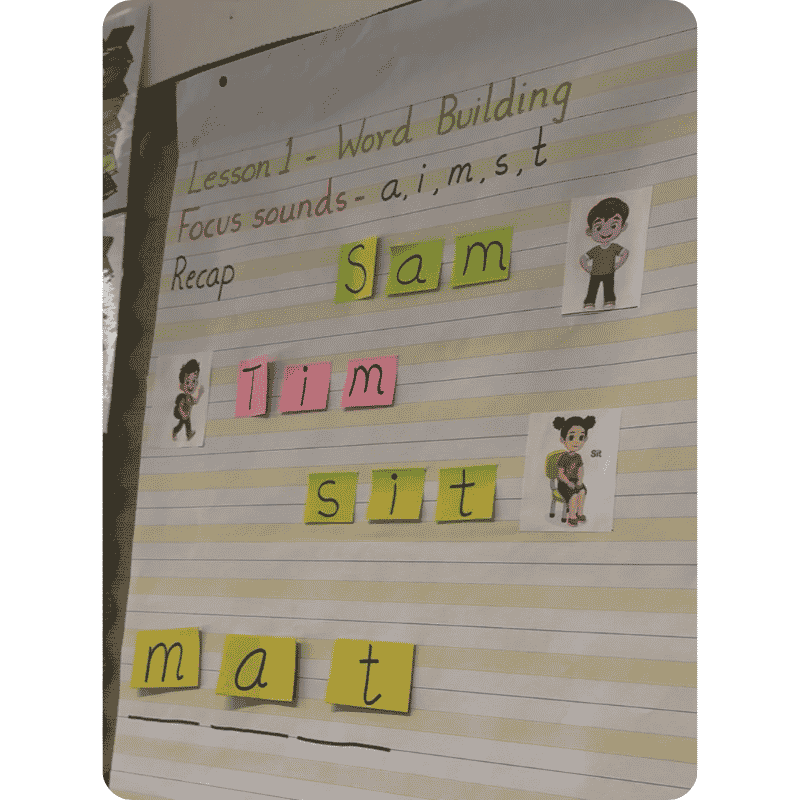
During phonics sessions, the children begin together for whole-class teaching. Where appropriate, they then work in three smaller groups, allowing adults to provide targeted support based on children’s individual needs and stage of development. The Nursery Teacher has completed the Sounds-Write training and leads the delivery of phonics within the classroom, while the Nursery Nurse and Teaching Assistant reinforce learning and provide additional support where needed.
Communication and language remain at the heart of everything we do. We continue to prioritise Phase 1 throughout Nursery, ensuring children develop strong listening, attention and speaking skills alongside oral blending.
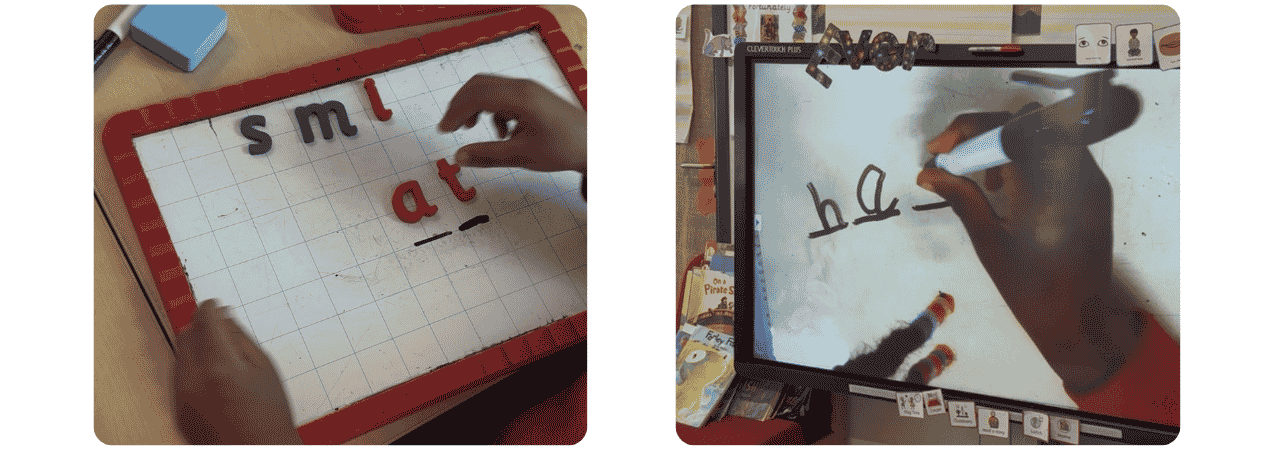
Once children are developmentally ready, we introduce Sounds-Write for Early Years. Sessions are short, practical and highly engaging, using songs, games, repetition, actions and lots of oral rehearsal. We ensure lessons remain playful while maintaining fidelity to the programme.
We never rush children through the programme. Instead, we carefully respond to each child’s developmental stage and integrate Sounds-Write alongside our wider play-based curriculum, storytelling, Talk for Writing and mark-making opportunities.
What has been the impact of training Nursery staff to introduce phonics?
The response from staff has been overwhelmingly positive. The training has significantly strengthened staff subject knowledge and confidence in teaching early reading. Staff appreciate having a clear progression and consistent routines, enabling them to deliver phonics with confidence whilst understanding the rationale behind the programme.
Perhaps the biggest impact has been the consistency it has created across Nursery and Reception. Both phases now use the same language, routines and expectations, providing children with a smooth transition and a coherent approach to learning to read.
Are children ready for Sounds-Write in Nursery?
The children absolutely love Sounds-Write sessions. They quickly become familiar with the routines and eagerly join in with the activities. Sessions are interactive, engaging and fun, allowing children to experience success from the very beginning.
One of the things we love most is how quickly the routines become embedded. For example, the children know that when they are writing, they need three lines. If an adult forgets to draw them, they quickly remind us! It has become such a natural part of our classroom that they confidently take ownership of the routine.
It has been wonderful to watch children develop confidence in recognising sounds, blending orally and beginning to read and write simple words. They take enormous pride in their achievements and often share their new learning with adults and friends throughout the day.
Some children participate confidently in the writing elements, whilst others continue to develop through oral rehearsal, mark making and fine motor experiences. Our staff carefully adapt support to meet individual needs, ensuring every child experiences success without unnecessary pressure.
What has been the impact of introducing Sounds-Write in Nursery?
Reception teachers have noticed a significant difference in children’s readiness for formal phonics teaching. Children arrive already familiar with the Sounds-Write routines, lesson structure and language, which means less time spent establishing routines and more time focused on learning.
The response from parents and carers has been incredibly positive. They are often amazed that their children are recognising sounds, blending words and beginning to read and write simple words, skills they never expected their child to develop before Reception. This has strengthened our home-school partnership, and families’ engagement in supporting early reading at home.
This year, 92% of our Year 1 children met the expected standard in the Phonics Screening Check, reflecting high-quality phonics teaching across the school, but also that beginning the Sounds-Write journey in Nursery has strengthened children’s foundations for reading success.
Perhaps the greatest measure of impact is the confidence we now see in our youngest learners. Children view themselves as readers from an earlier age, staff share a consistent approach across the Early Years, and the transition into Reception has never felt more seamless.
‘Introducing Sounds-Write into Nursery has been one of the most valuable developments we’ve made to our Early Years curriculum.
Our advice to other settings would be not to underestimate what Nursery children are capable of. With engaging teaching, high expectations and a developmentally appropriate approach, children can make an exceptional start to reading whilst continuing to enjoy a rich, language-filled Early Years experience.
Looking back, we only wish we’d introduced Sounds-Write into Nursery sooner.’