Success Stories
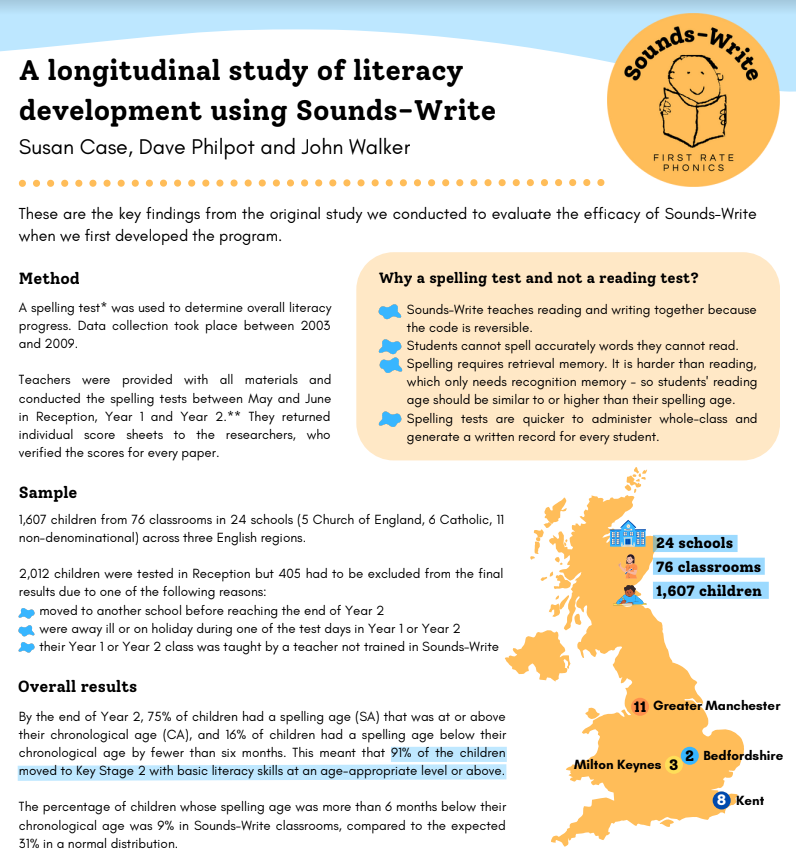
Longitudinal study of literacy development using Sounds-Write
Sounds-Write was conceived and written in 2002-3. From the outset, we encouraged schools to collect data on their students’ performance to determine the utility and effectiveness of the programme. These are the key findings from the original study, which reported on the literacy development journeys of 1,607 children from Reception to the end of Key Stage 1.
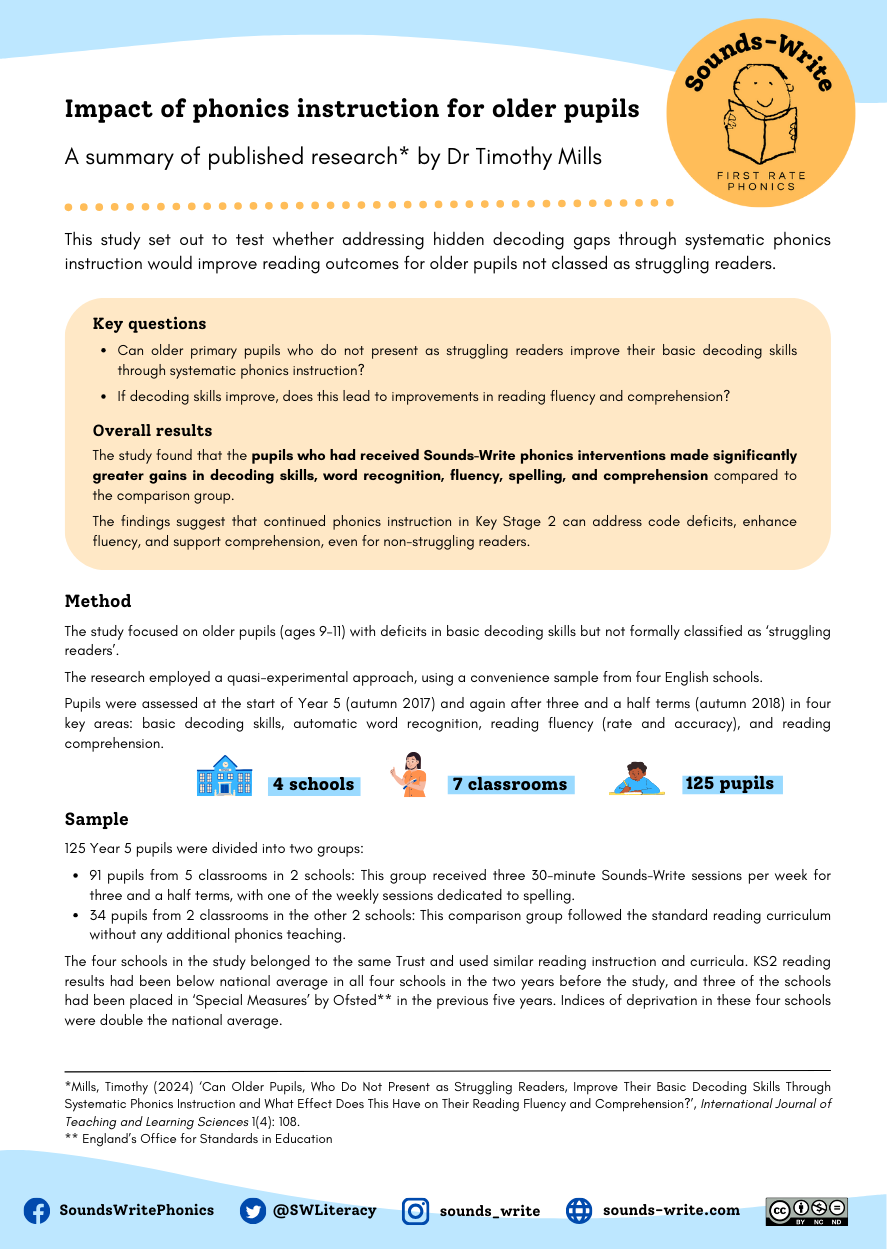
Impact of phonics instruction for older pupils
This study by Dr Timothy Mills set out to test whether addressing hidden decoding gaps through systematic phonics instruction would improve reading outcomes for older pupils not classed as struggling readers. The data showed that the pupils who had received Sounds-Write phonics interventions made significantly greater gains in decoding skills, word recognition, fluency, spelling, and comprehension. These findings suggest that continued phonics instruction in Key Stage 2 can address code deficits, enhance fluency, and support comprehension, even for non-struggling readers.
What do our customers say?
Allambie Heights Public School, Sydney
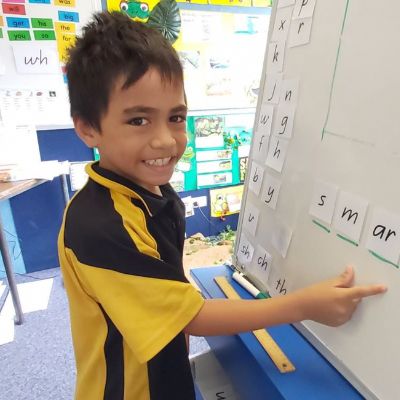
Cleveland State School, South East Queensland
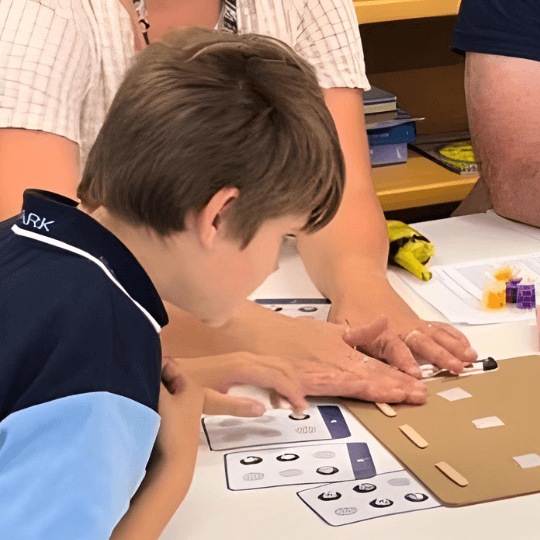
Clifford Park Special School, Toowoomba
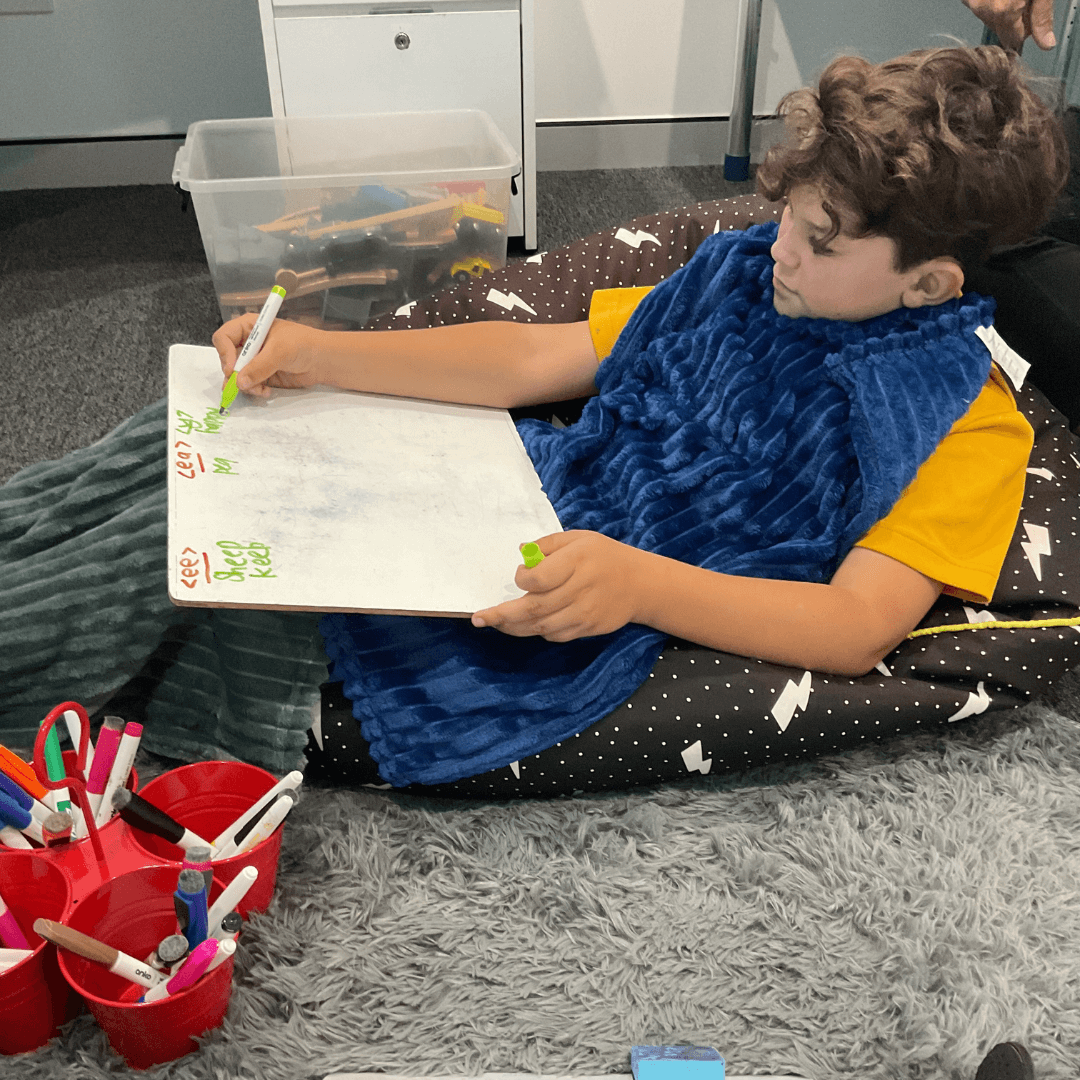
Di Van der Walt, Speech Pathologist, Perth, Australia
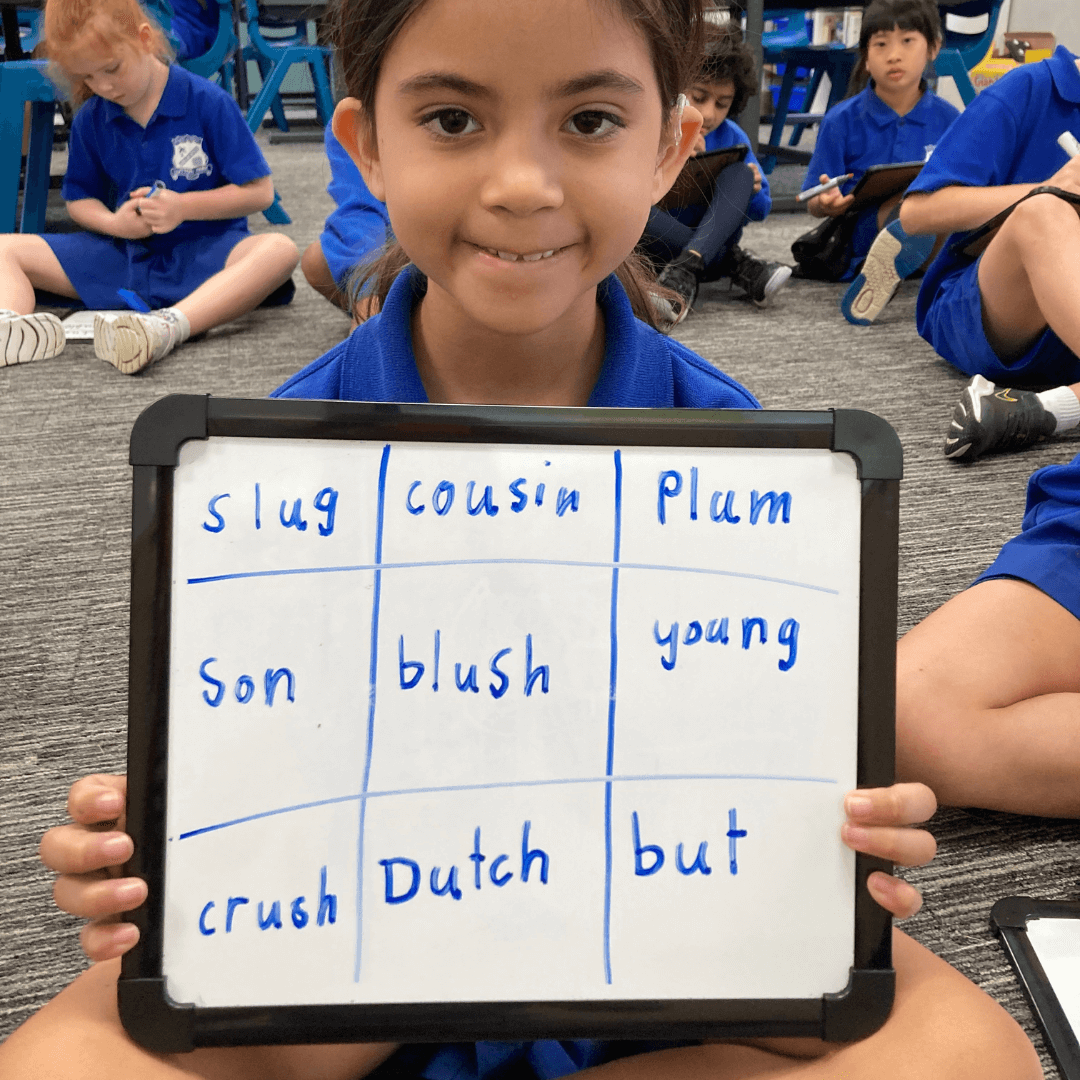
Dutton Park State School, Brisbane
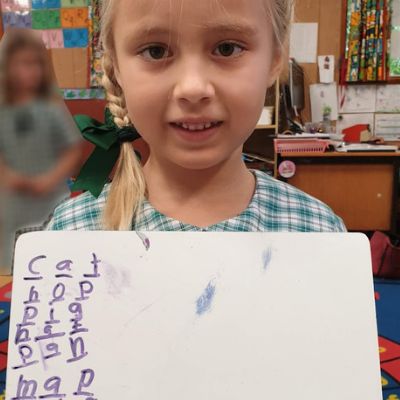
Lord Howe Central School, Lord Howe Island
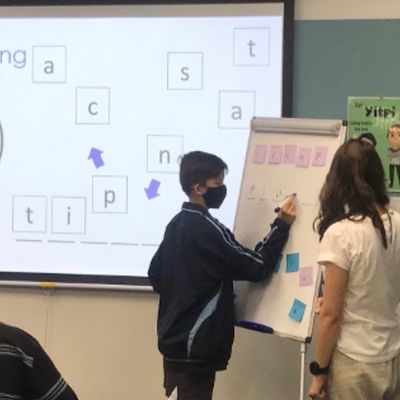
Parafield Gardens High School, Northern Adelaide
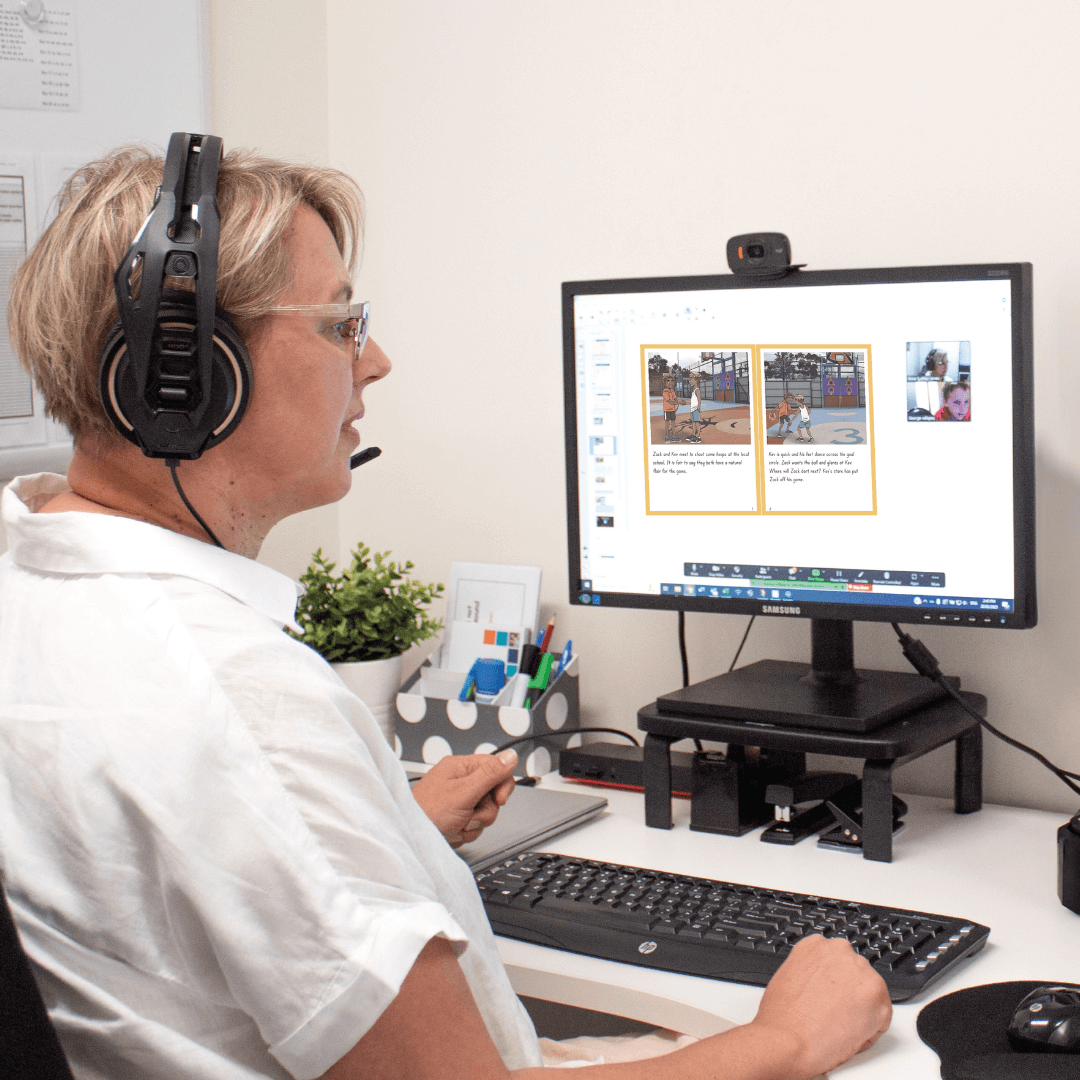
SPELD SA Online Tutoring, South Australia
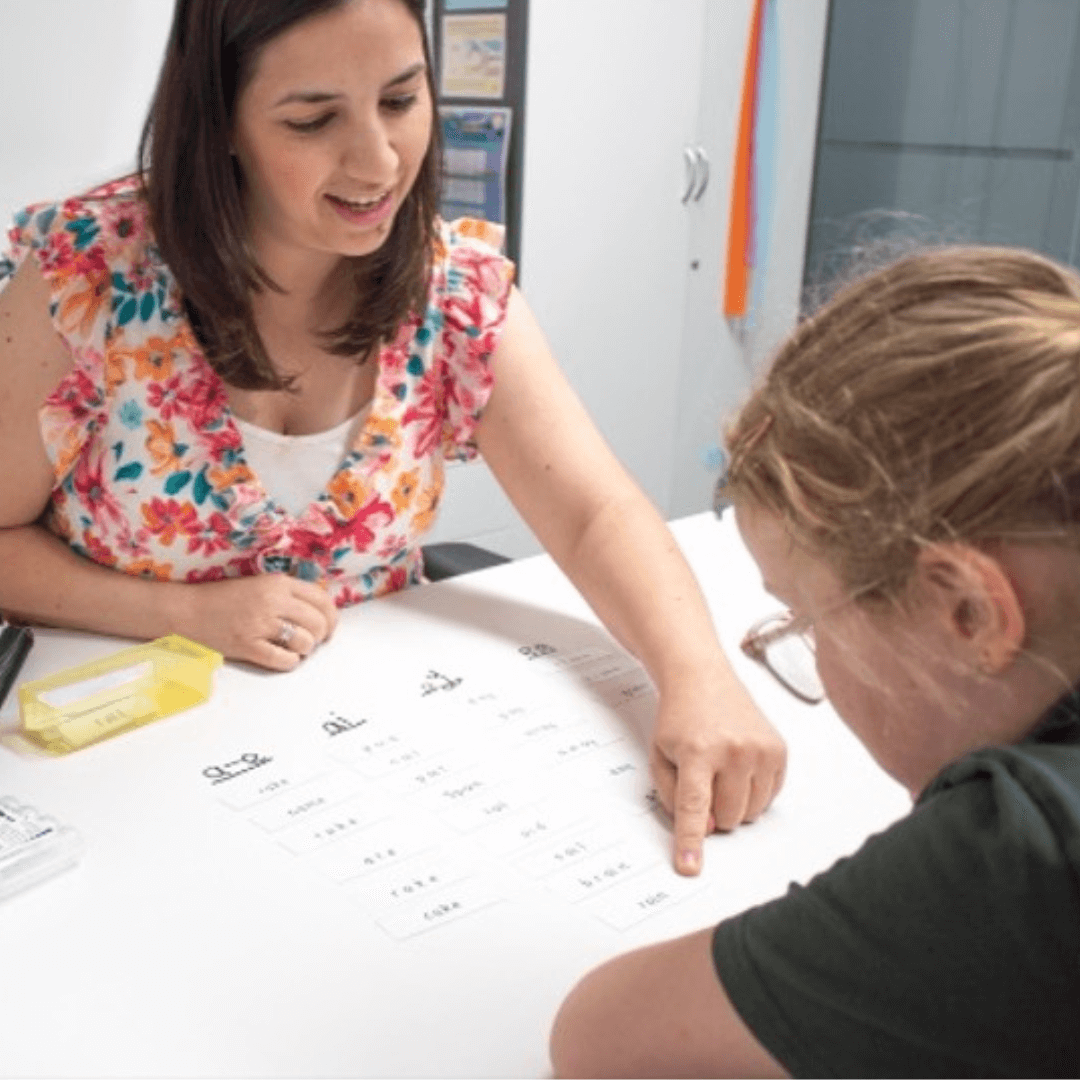
SPELD SA Literacy Clinic, South Australia
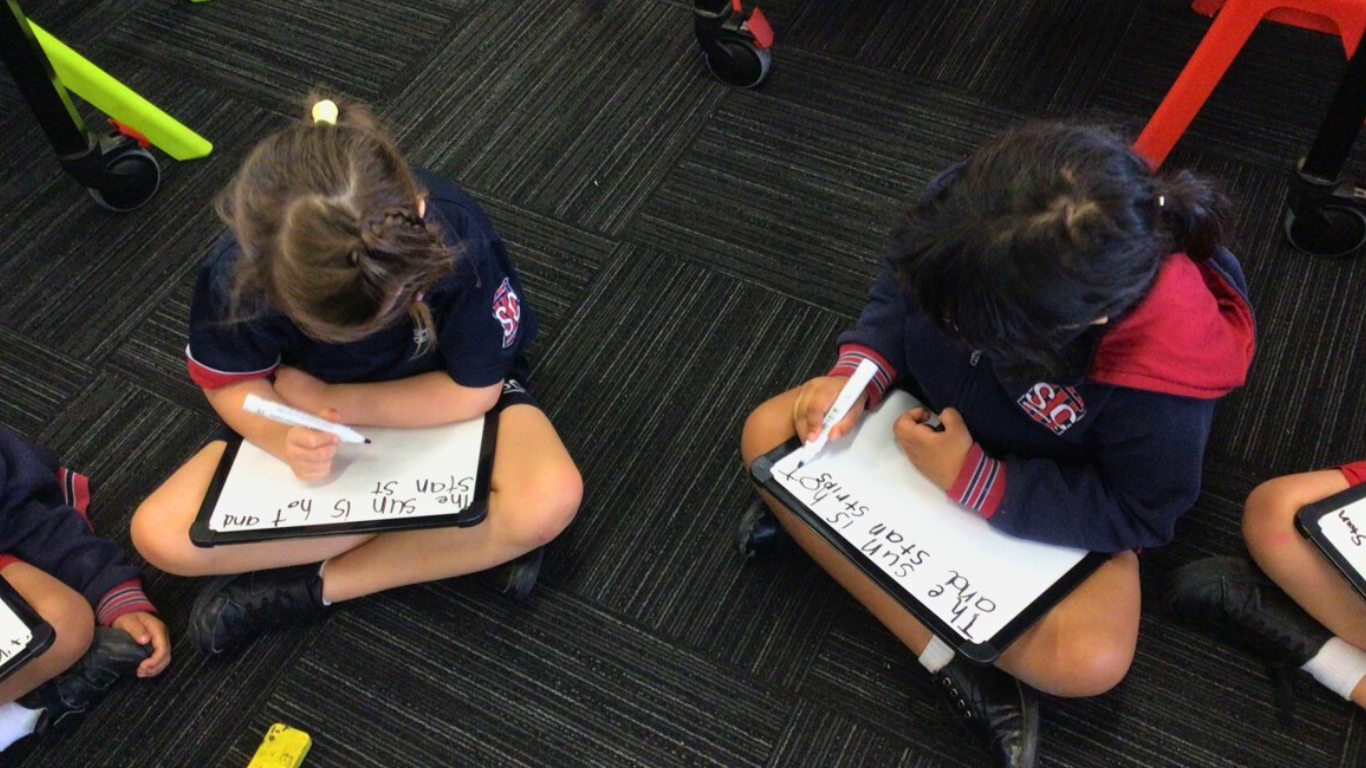
Springfield Central State School, Queensland
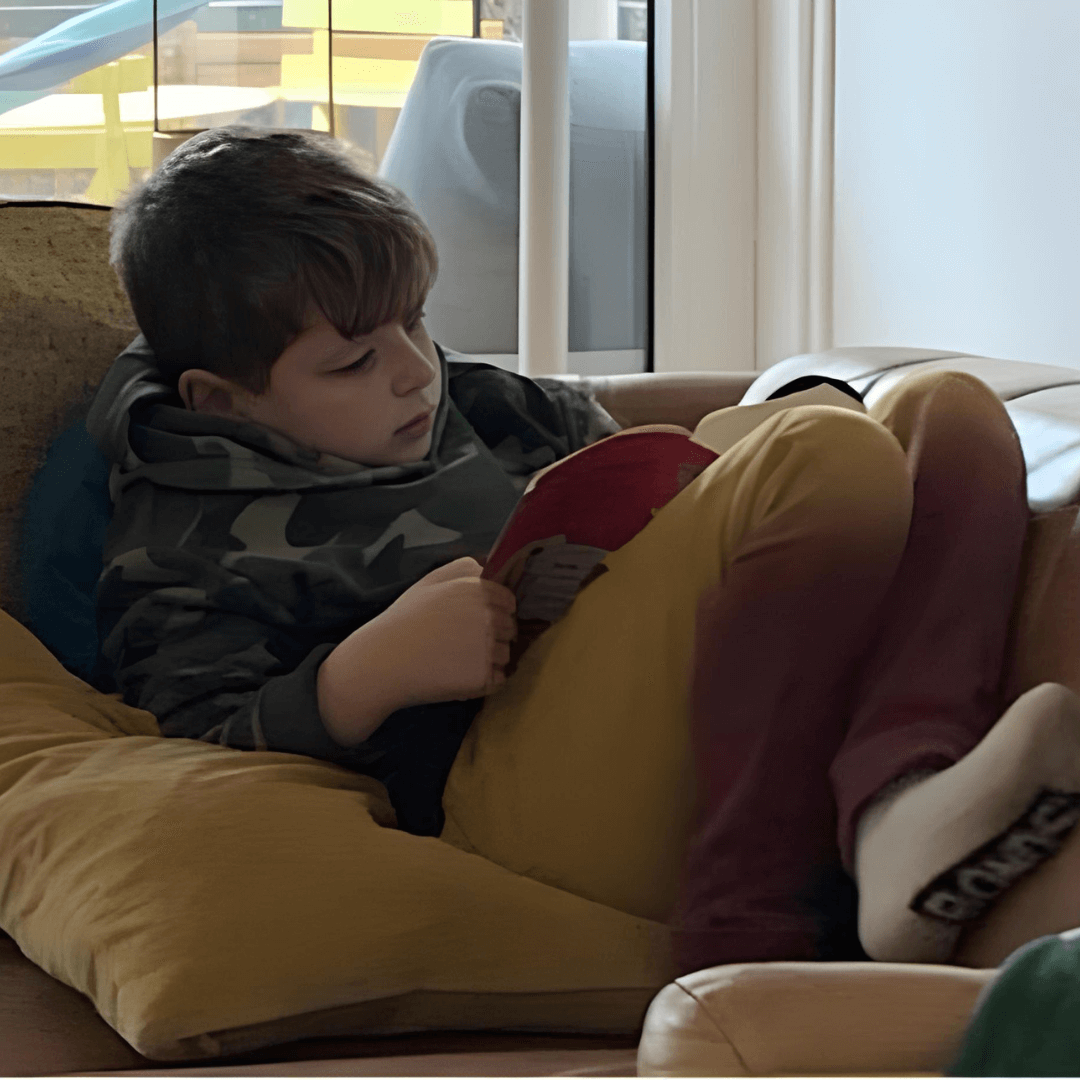
Sue White, Homeschooling Parent, Sydney
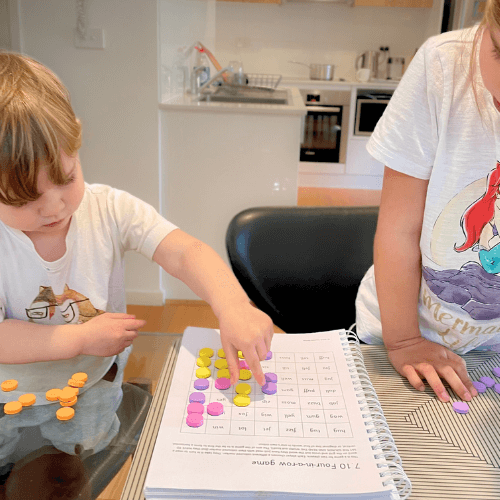
Susan Tracey, Homeschooling Parent, Melbourne
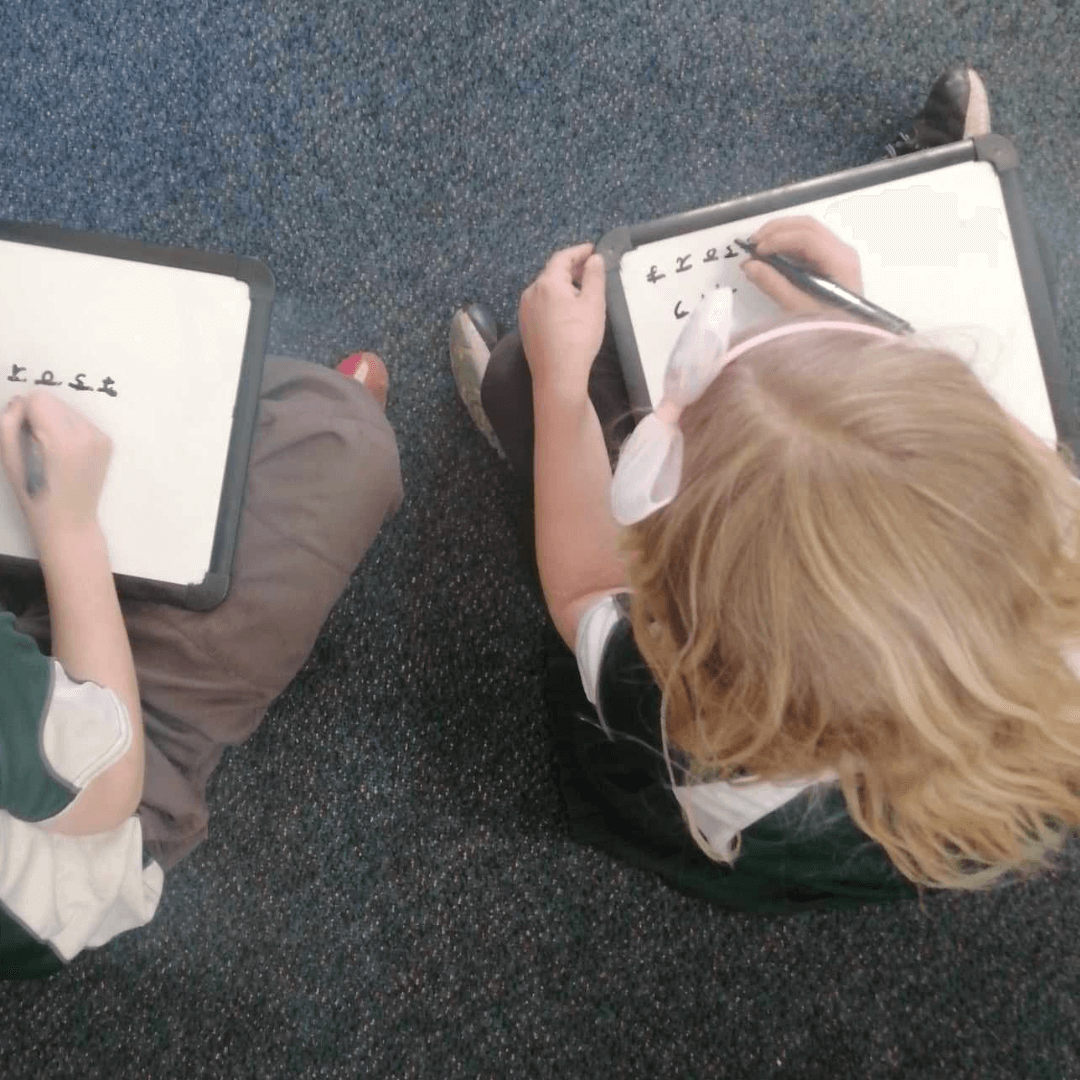
Wonthaggi Primary School, SEVR, Victoria
Sounds-Write is more than just a scheme for phonics. For Selby Community Primary School it has improved pupils’ self-esteem around reading and writing. Sounds-Write has developed stronger spellers and pupils who transfer their phonics knowledge straight into their written work.
Case Studies from Sounds-Write Practitioners
We’ve also published a book of peer-reviewed case studies in different geographical and educational settings.
Each case study includes data from a specific school (or other educational settings) and recommendations about how best to implement Sounds-Write.
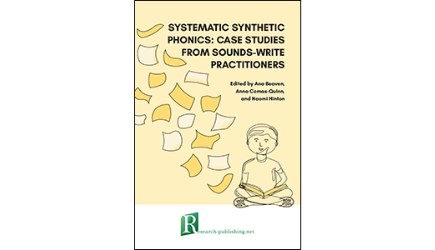
In her foreword to the book, Professor Pamela Snow said:
‘The publication of three national inquiries (the US in 2000, Australia in 2005, and England in 2006) heralded something of a false dawn in putting the major debates to rest, unanimously highlighting the importance of an early focus on explicitly and systematically teaching children (as readers and writers) how the English writing system works, alongside supporting their development in phonemic awareness, vocabulary, fluency, and comprehension.
Robust recommendations are one thing, but full implementation of those recommendations is something else altogether. This is why schools need access to high-quality programmes that have the heavy-lifting already done in terms of their theoretical foundations, scope and sequence, teaching materials and scripts, assessment and monitoring tools, high-quality training and coaching, and demonstration videos. Sounds-Write is such a programme, and it is no surprise that its developers have gone the extra nine yards to compile this collection of case studies about how Sounds-Write looks in action.’
(Snow, P. (2022). Foreword. In A. Beaven, A. Comas-Quinn & N. Hinton (Eds), Systematic synthetic phonics: case studies from Sounds-Write practitioners (pp. xv-xvi). Research-publishing.net. https://doi.org/10.14705/rpnet.2022.55.1https://research-publishing.net/book?10.14705/rpnet.2022.55.9782383720010353)